

What Does a Commercial Liability Policy Protect Against?


June 24, 2019

Whether you are the owner, manager or customer of a business, you should want the company to be protected by a commercial liability policy. These insurance policies protect businesses against claims for personal injury and property damage caused by a company’s operations or products. Bodily injuries that take place on the premises are also covered. Commercial liability policies are not all the same and don’t cover every single risk that companies face, but they do protect them from a number of claims and lawsuits and the financial devastation they might bring. If you are ever harmed while at a business or because you used their products, your lawyer can help you get a fair insurance settlement.


TYPES OF COVERAGE

The basic types of business liability coverage are claims-made and occurrence policies. When a business has claims-made coverage, the insurance company pays on claims that range from errors in financial statements to employee discrimination to customer injury. Under this type of policy, coverage depends on when the claim is filed and not when the incident occurred. If a company has an active policy in June but the incident occurred in February, it is covered.


Occurrence policies don’t offer a business the same degree of protection because they pay claims that occur within the actual coverage period. If a company has an active policy during 2019, the injury and/or damages from an incident are covered for that period. If the incident occurred before a policy was active, the company will have no coverage.


COMMERCIAL LIABILITY EXCLUSIONS

Commercial General Liability or CGL policies do exclude certain types of claims, including worker’s compensation, professional liability and corporate directors and officers liability. Liability for operating a car or truck for business purposes is also excluded, as well as coverage for pollution resulting from hazardous materials such as gasoline or fertilizer. Businesses that store and/or transport these materials need an environmental policy to protect their interests.


Fortunately, most potential liabilities can be covered by other special policies.

You have probably been involved in a few product recalls during your life. When you buy a food item or other product that is then recalled, the manufacturer should be covered by a special liability policy; otherwise, they won’t be able to cover the massive cost of a recall of items such as children’s car seats, certain vehicle models or even romaine lettuce.


Unfortunately, businesses can easily violate state and federal regulations even when they try to follow the rules. General liability policies do not cover contract disputes and action by government agencies against a business. That situation requires another type of insurance. Businesses will need multiple policies to keep them protected from the majority of liability claims.


PERSONAL INJURY LAWSUITS

Commercial liability coverage is not just for big corporations. Businesses of all sizes need these insurance policies to protect against claims of negligence that resulted in harm to their customers. If the insurance company does not reach a settlement with the injured party, they may choose to file a lawsuit. In that instance, the plaintiff needs to establish three main items to be victorious:

  • Duty of Care- the responsibility of a business to provide a safe environment.
  • Breach of Duty of Care- failure to provide that environment through negligence.
  • Harm- injury caused by the Duty of Care breach.


For instance, you can be injured in a retail store due to broken or otherwise faulty staircases and elevators, poor parking lot lighting, falling merchandise, and rough-edged shelves. One of the main claims against a business’s general liability insurance is for slip and fall accidents caused by wet floors. A business has a responsibility to maintain their property so that a customer exercising reasonable care can safely do business there.


COVERAGE BENEFITS

In addition to protecting the business from claims, commercial liability policies protect the consumer. If you are injured, through no fault of your own, you may be due a financial settlement. Without commercial liability coverage, many businesses, particularly small companies, would be unable to pay large claims made by those who suffered injuries as a result of the company’s negligence. In those cases, filing a lawsuit would be pointless because no money could be recovered. These commercial liability policies protect the company, employees and consumers.


Companies without enough insurance are gambling that they won’t face a major settlement demand or lawsuit. That is a bet they are destined to lose. Even small businesses making around $1,000,000 annually spend $20,000 as a result of lawsuits. Paying for liability insurance is just the cost of doing business in the United States.


WHITESIDE & GOLDBERG

The Chicago area is home to many large corporations and small businesses. Having the right type of commercial liability coverage is essential to their continued growth. Plus, all citizens deserve to be protected from harm caused by a company’s facilities or products. This insurance protects you financially If a business fails to provide a safe environment through negligence and you are injured as a result. If you are harmed or your property damaged at a commercial facility, contact Whiteside & Goldberg. Their expert attorneys are experts at business liability law.


The attorneys at Whiteside & Goldberg have the expertise to get you the settlement you deserve through negotiations with the insurance companies or by taking the case to court. Take advantage of their free consultation offer to learn more about their services. You will pay nothing until Whiteside & Goldberg secures a settlement for you. For more information about commercial liability, call 312-334-6875 for the Whiteside & Goldberg Michigan Avenue location and 815-730-7535 for their Shorewood office. Only personal injury experts can give you the legal help you need when it comes to commercial liability issues.


The content of this blog is intended for informational purposes only and does not constitute or establish an attorney-client relationship, nor constitute legal advice. If you wish to discuss any further aspect of the material contained herein, please contact an attorney at Whiteside & Goldberg, Ltd.


April 14, 2026
Victims of Hidden Camera at TJ Maxx in Machesney Park May Have Legal Rights Victims of a hidden camera discovered in a TJ Maxx dressing room in Machesney Park, Illinois may have the right to pursue legal action. Whiteside & Goldberg is actively investigating claims involving unlawful video recording and invasion of privacy tied to this incident. If you used the women’s dressing room at the TJ Maxx location between May 1, 2025 and February 28, 2026 , you may have been affected—even if you were unaware at the time. What Happened at the TJ Maxx in Machesney Park? A criminal investigation revealed that a store manager allegedly placed a hidden recording device inside the women’s dressing room at the Machesney Park TJ Maxx. The device was discovered after a customer reported seeing what appeared to be a camera. Law enforcement, including the Winnebago County Sheriff's Office, is continuing to investigate the situation. Authorities have asked anyone who may have used the dressing room during the affected timeframe to come forward. Contact Detective Valdivieso: (815) 319-6406 Who May Be Affected by This Incident? You may be eligible to take legal action if: You used the women’s dressing room at the Machesney Park TJ Maxx Your visit occurred between May 1, 2025 and February 28, 2026 You were unknowingly recorded or potentially recorded You experienced emotional distress, embarrassment, or privacy violations This may include: Customers Minors Employees Your Legal Rights After a Hidden Camera Privacy Violation Illinois law provides strong protections for individuals in private spaces like dressing rooms. Victims of hidden camera incidents may be entitled to pursue claims for: Invasion of Privacy Intentional Infliction of Emotional Distress Negligence by the business or property owner Failure to provide a safe and secure environment Even if you are unsure whether you were recorded, you may still have a valid claim if you were exposed to the risk of surveillance in a private setting. What Compensation Could Victims Receive? There is no fee unless we win. We do it on contingency which means you don’t pay us unless we win and get you a settlement What To Do If You May Be a Victim If you believe you may have been affected: Contact law enforcement to report your experience Document any details you remember (dates, times, visits) Avoid discussing details publicly before speaking with an attorney Contact a qualified privacy rights lawyer to understand your options Free Confidential Consultation for TJ Maxx Victims If you or someone you know may have been impacted by the hidden camera incident at the Machesney Park TJ Maxx, contact Whiteside & Goldberg today. Call: (312) 334-6875 Email: info@wglawgroup.com Your consultation is free, confidential, and comes with no obligation . There may be limited time to file a claim, so it is important to act quickly. Frequently Asked Questions (FAQs) Can I sue TJ Maxx for a hidden camera in a dressing room? Yes. Victims may have legal claims for invasion of privacy, negligence, and emotional distress. Businesses have a duty to protect customers in private areas. How do I know if I was recorded? You may not know for certain. However, if you used the dressing room during the affected timeframe, you may still be eligible to pursue a claim. Is there a deadline to file a lawsuit? Yes. Illinois law limits the time you have to file a claim. Speaking with an attorney as soon as possible is important to protect your rights. What if my child used the dressing room? Minors who may have been affected could have additional legal protections. Parents should contact an attorney immediately. How much does it cost to hire a lawyer? Most cases like this are handled on a contingency basis, meaning you pay nothing unless compensationWhiteside & Goldberg
August 17, 2020
According to NHTSA , motorcyclists only make up about 5% of all drivers. Yet, research shows that fatal motorcycle accidents happened 27 times more often than passenger car occupant accidents in 2017. Therefore, it’s important to know what you should do after a motorcycle accident whether you are the rider, the passenger vehicle driver, or just an innocent bystander. While there are things you can do to protect yourself against a motorcycle accident, even the most careful drivers can find themselves in unavoidable accidents. Immediately after an accident, your adrenaline will be pumping, and you may be in a state of shock. Learning what steps to take now will help you react properly should you ever need to. Keep reading to learn 6 easy steps to take after a motorcycle accident. WHAT TO DO AFTER A MOTORCYCLE ACCIDENT Accidents of any kind tend to happen when you are least expecting it. Maybe it’s your usual commute that you drive every day, or maybe you’re just running a quick errand. The NHTSA reports that approximately 52 percent of all accidents occur within a five-mile radius of home and 69 percent of all car accidents occur within a ten-mile radius from home. To avoid being caught off guard too much, it’s best to always expect the unexpected and drive defensively at all times. 1. Get to safety The first thing you should do is analyze your surroundings and current situation. Are you in harm’s way? Are you badly injured? If possible, remove yourself from the roadway and out of traffic. Check to see if anyone else was involved in the accident and help them get to safety as best as you can. 2. Do not remove your protective gear After an accident, you may be in shock and the adrenaline may be preventing you from feeling any pain or injuries. Always keep this in mind and wait for paramedics to arrive before you remove your helmet and other gear to avoid exacerbating injuries. 3. Call 911 After you have gotten to safety and before you remove any protective gear, call 911 to report the accident. Depending on the severity of the accident, police and paramedics may come to the scene. 4. Seek medical attention Even if you don’t think you’re injured, it’s always best to get checked out by a medical professional after any accident. Serious injuries may not be apparent right away and sometimes it will take days, weeks, or months for symptoms to appear. If you were on a motorcycle during the accident, you are extremely susceptible to broken bones and serious internal damage and bleeding. 5. Gather evidence No matter the accident, it’s always a good idea to gather evidence immediately after. This means taking your own pictures, writing notes, and obtaining a copy of the police report. Speak with the other driver to swap insurance information and any other contact information. 6. Speak with a lawyer and your insurance company When is the best time to speak with a personal injury lawyer? The sooner, the better. Hiring a qualified motorcycle accident lawyer can make all the difference in your insurance settlement. Most of the time, insurance companies will offer you the lowest amount possible, but an accident attorney can help negotiate with insurance companies. It’s always a good idea to consult with a lawyer before accepting any settlement. Your lawyer will usually speak with your insurance company on your behalf, but regardless of who contacts your insurance, you should always speak with them in a timely manner. These are the 6 steps to take immediately after a motorcycle accident. In addition, it’s important to note that you should never admit fault if you were just in an accident. Even if you think you made a mistake or could have avoided the accident, words of fault could be used against you. This applies when speaking to the other driver, police officers, and insurance companies. STATUTE OF LIMITATIONS If you are involved in a motorcycle accident, you are entitled to sue for damages when injuries or fatalities result. When motorcycles are involved, the severity of injuries dramatically increase. As with any personal injury case, there is a statute of limitations during which a claim should be filed. In Illinois, the injured party has 2 years from the date of the accident to file a claim. However, there are a few exceptions to this rule. The time to file a case may be extended if you were under the age of 18 or if you were mentally incompetent at the time of the accident. The time to file may be shortened if the accident involved a government vehicle or if you are filing a wrongful death claim on behalf of someone who died in the accident. In order to receive the maximum compensation for your injuries, you should reach out to a personal injury attorney right away. WHITESIDE & GOLDBERG, LTD. As you can see, there are many crucial steps to take quickly after being involved in a motorcycle accident in order to file a successful personal injury claim. To sum it up, you should: Seek out prompt medical attention Take pictures and notes Obtain copies of all medical records and police reports Hire an experienced attorney to help you file a claim within the statute of limitations Whether you have sustained minor or life altering injuries, we encourage you to follow the steps and set yourself up for success by working with a qualified personal injury lawyer. If you are in the Chicago area, Whiteside & Goldberg Law Group offers free consultations for anyone who would like to discuss their case. No matter the severity of your accident and injuries, it is always important to contact an experienced lawyer to help you recover any losses or damages. The attorneys at Whiteside & Goldberg Law Group never charge a fee until they win a settlement for you. You can contact them today at by calling 312-334-6875 for the Whiteside & Goldberg Law Group Michigan Avenue location and 815-730-7535 for their Shorewood office. The content of this blog is intended for informational purposes only and does not constitute or establish an attorney-client relationship, nor constitute legal advice. If you wish to discuss any further aspect of the material contained herein, please contact an attorney at Whiteside & Goldberg, Ltd.
August 13, 2020
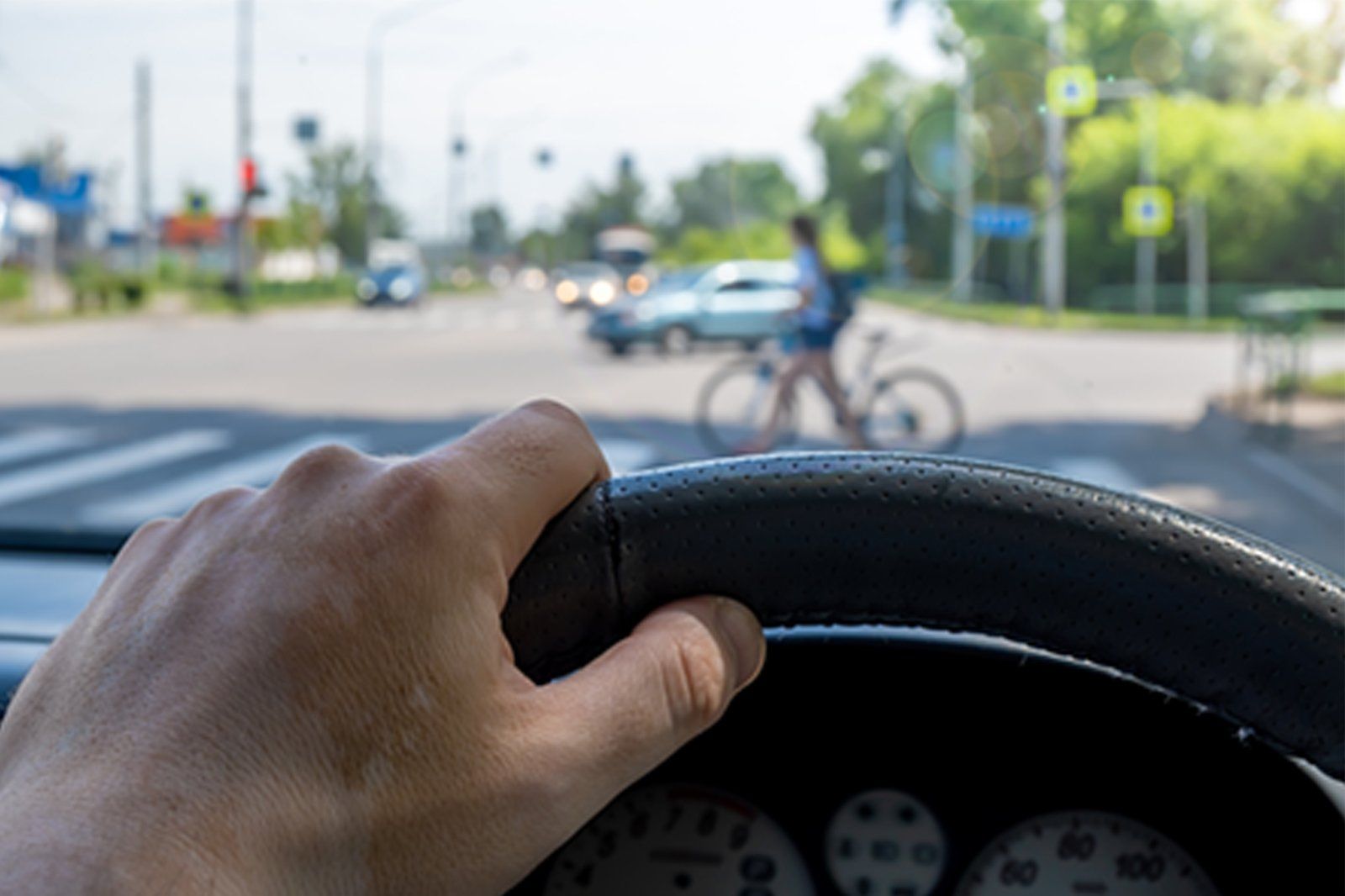
While driving, it is not only important to keep your eye out for other vehicles around you, but also for pedestrians near the road or crossing streets. According to the CDC , there were 5,977 pedestrians killed and 137,000 injured in auto accidents in in 2017 in the United States. In Illinois alone there were a total of 4,940 pedestrian accidents in 2017. DETERMINING FAULT When determining who is at fault in an accident involving a pedestrian it is important to take into consideration many different factors. The main determining factor to establish who is at fault, is in regard to negligence. Negligence, according to FindLaw , is the “failure to do (or not do) something that a reasonable person in a similar situation would do, to protect others from foreseeable risks”. In order to obtain compensation for damages or injuries, the injured person must prove that the person at fault meets the following criteria: Owed a legal duty to the plaintiff. Failed to follow through with the legal duty. Caused the accident involving the plaintiff. The plaintiff was injured as a direct result of the accident caused. In some cases, there may be multiple liable parties. The main parties that could all be held liable would include first, the most obvious case, the driver of the vehicle that caused the accident. However, in other circumstances, whoever is responsible in maintaining the sidewalk, crosswalk, road or parking lot where the accident occurred, or even the pedestrian themselves could also hold liability. D  UTY OF CARE DRIVER By getting behind the vehicle and making the active decision to drive a car, you take on a driver’s duty of care. This means that you are liable to exercise a reasonable amount of care when performing this action. Failing to commit to and practice this duty of care would be considered negligence. Thus, leaving you liable for any harm or injury occurring due to your lack thereof. Some basic duties of care as a driver include: Following the speed limit Yielding to pedestrians at crosswalks Following traffic signals/lights/signs Signaling when turning or changing lanes Giving your full attention to driving (no distractions) Not driving under the influence (alcohol/drugs) Being aware of the weather or traffic conditions and practicing extra caution when needed Use a greater degree of care when driving in areas where children are present PEDESTRIAN Even though pedestrians may generally have the “right of way” in most circumstances, they also have a duty of care to maintain. Failure to comply can result in “contributory negligence” if their lack of care contributed to their resulting injuries in an accident. Duties of care as a pedestrian include: Following the signals at an intersection, and only walking when the “walk” signal is displayed. Using only designated crosswalks to cross streets. Using reasonable caution when deciding to cross a street by checking both ways to ensure no cars are coming. Not walking out in front of a moving vehicle in the street. In Illinois, pedestrians have the right-of-way in most cases. According to the Illinois Vehicle Code , pedestrians still have to follow their basic duty of care by not walking out in front of a moving vehicle, use designated crosswalks, and follow all other designated traffic signals. However, if attempting to cross the street in an area with a lack of traffic signals a driver still must yield. Additionally, in the state of Illinois, hitchhiking as a pedestrian is illegal. Illinois follows the “modified comparative fault theory”. Meaning that if the plaintiff is deemed at least 51% responsible for the accident, they will not be able to collect compensation. If the plaintiff is less than 51% responsible, then compensation may be obtained from the defendant. However, due to the modified comparative fault theory, compensation will accurately represent the degree of fault by subtracting the plaintiff’s percentage of fault. RISKS The CDC has provided information in regard to what circumstances a pedestrian accident may be more likely to occur, and who is most often involved. In order to do your best to reduce these types of accidents it is important to recognize when you should be more alert when operating a vehicle, and when you should not be driving at all due to impaired judgement. ALCOHOL Approximately 47% of accidents causing a pedestrian death involved alcohol levels above .08 g/dL in either the driver and/or pedestrian ELDERLY & CHILDREN 20% of pedestrian deaths and 10% of injuries consisted of pedestrians ages 65 and older (2017). About 20% of children 15 years or younger killed in traffic accidents were pedestrians (2017). SPEED Driving at high speeds will increase the chances of hitting a pedestrian and the severity of injury. TIME/LOCATION The majority of pedestrian deaths tend to happen at night in urban, non-intersection locations. HOW TO STAY SAFE Only cross the street using designated crosswalks. Walk on the sidewalk, not in the street. Wear reflective clothing when out at night. Be aware of your surroundings. Limit use of earbuds or phone when walking near a road. WHITESIDE & GOLDBERG, LTD. If you have been involved in an auto accident with a pedestrian, whether you were the driver, or the pedestrian, we encourage you to set yourself up for success by working with a qualified personal injury lawyer. If you are in the Chicago area, Whiteside & Goldberg Law Group offers free consultations for anyone who would like to discuss their case. No matter the severity, it is always important to contact an experienced lawyer to help you recover any losses or damages. The attorneys at Whiteside & Goldberg Law Group never charge a fee until they win a settlement for you. You can contact them today at by calling 312-334-6875 for the Whiteside & Goldberg Law Group Michigan Avenue location and 815-730-7535 for their Shorewood office. The content of this blog is intended for informational purposes only and does not constitute or establish an attorney-client relationship, nor constitute legal advice. If you wish to discuss any further aspect of the material contained herein, please contact an attorney at Whiteside & Goldberg, Ltd.

More Posts